
- The GenX320 Starter Kit delivers ultra-low power, high-speed event-based vision for Raspberry Pi 5.
- Event-based sensors only report scene changes, offering real-time responsiveness and minimal data load.
- Extensive open-source support (OpenEB, OpenMV IDE) enables rapid prototyping and deep customization.
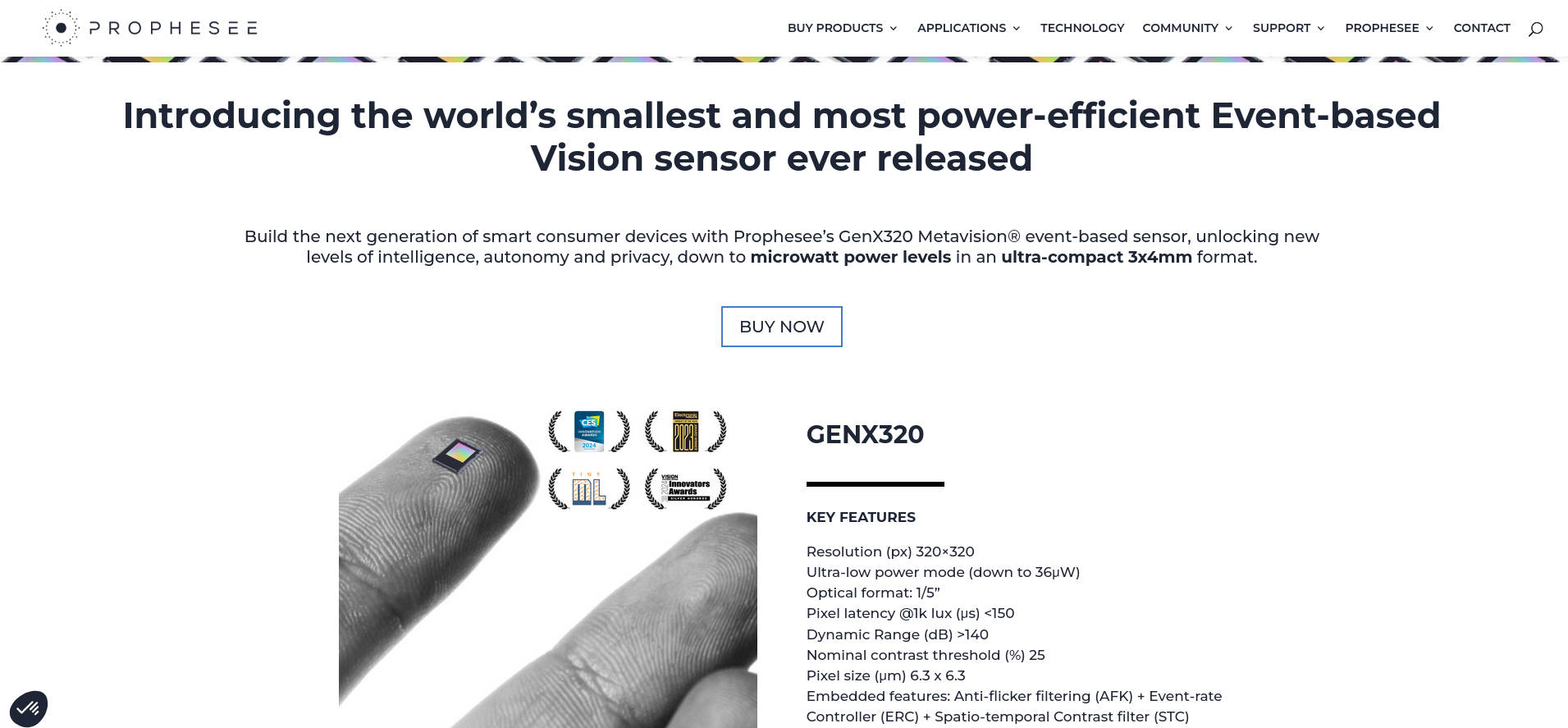
Event-based vision technology is transforming the way machines perceive and interact with their environment, and the Prophesee GenX320 Starter Kit is right at the heart of this revolution. If you’re a developer, researcher, roboticist, or simply an electronics enthusiast searching for a powerful yet accessible way to bring event-based vision to the Raspberry Pi 5, there’s never been a better time to dive in.
In this article, we’ll take a deep dive into the GenX320 Starter Kit for Raspberry Pi 5, demystifying its capabilities, examining its hardware and software features, and exploring why this compact event-based camera is generating so much excitement in the embedded vision community. We’ll pull together every known detail, answer common questions, and help you decide if this innovative kit is the next essential tool for your vision-based project.
What Is the Prophesee GenX320 Starter Kit?
The Prophesee GenX320 Starter Kit is a highly compact, low-latency development platform designed around the cutting-edge Prophesee GENX320 event-based image sensor. Unlike conventional cameras, which capture frames at fixed intervals, event-based sensors output only the changes (“events”) in a scene, enabling ultra-low power operation, real-time responsiveness, and a whole new realm of machine vision applications. This technology closely mimics how the human eye perceives movement and changes in light.
Core Hardware Features and Overview
- Sensor: GENX320 event-based vision sensor by Prophesee
- Resolution: 320 x 320 pixels
- Dynamic Range: Greater than 140 dB, which means incredible performance even in scenes with extreme light and dark regions
- Event Rate: Equivalent to around 10,000 frames per second
- Latency: Sub-millisecond, for real-time responsiveness
- Power Consumption: As low as 3 mW for data streaming, offering exceptional energy efficiency
The starter kit is specifically made for the Raspberry Pi 5 platform and connects directly to the Pi’s camera interface via a 20 cm MIPI-compatible flex cable (typically supplied in the kit). This makes integration seamless for embedded applications.
Configuration Options and What’s Included
The Prophesee GenX320 Starter Kit for Raspberry Pi 5 is offered in two main configurations. Both configurations provide you with a complete lensed event-based camera board, and the necessary flex cable for easy connection. What sets the kit apart is its focus on open development—developers can leverage the power of OpenEB, an open-source toolkit, for rapid prototyping and software integration.
With OpenEB, you gain access to Python and C++ APIs, drivers, recording/replay utilities, and visualization tools—putting the full power of event-based data at your fingertips. This open ecosystem is a game changer for quick iteration and deep experimentation, whether you’re building real-time robotics apps or analyzing complex motion in industrial settings.
What Makes Event-Based Vision Different?
Traditional cameras capture scenes by taking discrete frames at regular intervals, regardless of whether anything significant is happening in the field of view. Event-based vision flips that idea. Here’s how:
- Each pixel operates independently, reacting only to changes in illumination (rising or falling light). This means the sensor outputs data only when something changes, greatly reducing redundant information and latency.
- This approach eliminates motion blur (common with fast-moving objects in frame-based systems) and drastically reduces both processing requirements and storage needs.
- With dynamic range exceeding 140 dB, the GenX320 can “see” motion across both bright and dark regions simultaneously, outperforming most traditional sensors in challenging lighting conditions.
- Low-light performance is particularly impressive: the sensor can detect motion in twilight conditions (below 5 lux) and respond to light level changes as faint as 0.05 lux.
This makes event-based vision ideal for a wide variety of demanding applications, from robotics and drones to industrial safety and advanced research.
How the GenX320 Sensor Works
Every pixel in the GenX320 event camera measures relative increases or decreases in light intensity—essentially, it “wakes up” only when something changes. Here’s what that means for developers:
- By default, the sensor delivers 320×320 8-bit frames. A pixel value of 128 means no change; an increase in light pushes the value up to 255; a decrease drops it to 0.
- The contrast multiplier (default is x16) can be adjusted to make events more visible—great for demos or tuning vision algorithms.
- Frame rate is highly flexible. The default is 50 Hz (20 ms per frame), but can be set as high as 200 Hz for higher-speed motion, each frame then representing 5 ms of events.
- The sensor can also run in a specialized “event mode”: by recompiling firmware, you can generate a frame every time a set number of events (such as 25,600) are detected. This can be useful in situations where frame timing must be tightly tied to scene activity, rather than a fixed clock.
Color palettes and additional visualization options are available for making event streams more interpretable, especially during demonstrations or algorithm development. However, keep in mind that applying color palettes is CPU-intensive and should be reserved for presentation purposes rather than real-time processing.
Software Ecosystem and Integration
The GenX320 Starter Kit is designed to empower developers across the spectrum—from hobbyists to professionals:
- OpenEB provides driver support, recording/replay tools, and visualization interfaces, with robust APIs for Python and C++. This ecosystem lowers the learning curve for software development.
- The kit is fully compatible with the OpenMV IDE for those who wish to experiment further. Comprehensive sensor configuration, including contrast, brightness, framerate, and pixel format adjustments, can be set within the IDE.
- Documentation and example projects are available via Prophesee’s docs portal. There you’ll find code snippets, tutorials, and detailed API descriptions tailored to the GenX320 sensor family.
- For integration with OpenMV boards (such as the H7 Plus or RT1062), there are dedicated examples under the Cameras > Event Cameras > GenX320 folder within the OpenMV IDE.
The flexibility and depth of the software support truly set this kit apart from almost every other camera module in the embedded vision space.
Real-World Applications
The capabilities of the Prophesee GenX320 Starter Kit are best illustrated by the incredible variety of use cases it enables. Here are some of the most compelling applications:
- Robotics and Drones: Real-time obstacle avoidance, high-precision object tracking, fast SLAM (Simultaneous Localization and Mapping), and autonomous navigation in complex, dynamic environments.
- Industrial IoT: Automated inspection lines, 3D scanning, defect detection, and high-speed motion monitoring without the risk of missing events due to frame limitations or motion blur.
- Surveillance and Safety: Fall detection, gesture and eye tracking, intrusion detection, and situational awareness in challenging light conditions.
- Vibration and Motion Analysis: Monitoring subtle mechanical vibrations or analyzing rapid movements that would otherwise be missed by conventional cameras.
- Low-Light Vision: Sensing into twilight or near darkness without the need for IR illumination or gain adjustments.
Essentially, if your application depends on detecting and responding to movement or change, the GenX320 Starter Kit opens up a realm of possibilities that standard frame-based cameras simply can’t match.
Hands-On Configuration and Tuning
The GenX320 kit is designed for easy experimentation, with several practical controls for tuning the sensor to your needs:
- Pixel Format: Set to GRAYSCALE for optimal event-based performance.
- Frame Size: B320X320 is the default, but can be adjusted depending on your use case.
- Framerate: Adjust to balance processing load and responsiveness—from detailed motion analysis at high rates to power-efficient monitoring at lower rates.
- Contrast/Brightness: Use
sensor.set_contrast()andsensor.set_brightness()to optimize visibility and trade-off detail vs. vividness. - Color Palette: Optional for demos (
image.PALETTE_EVT_DARKorimage.PALETTE_EVT_LIGHT), but can be CPU intensive. - Focus Adjustment: The GenX320 module comes with an adjustable lens; you can fine-tune the focus using a specialized tool or by modifying the cover as described in Prophesee’s documentation.
Advanced users can even recompile OpenMV firmware to operate the camera in pure “event mode” for certain highly specialized algorithms, though this is generally not recommended for standard embedded development due to increased CPU and memory use.
Community, Support, and Availability
The GenX320 kit has been met with enthusiastic interest from the embedded vision community, as seen in forum discussions and social media. Developers have expressed eagerness to integrate event-based cameras into their Raspberry Pi 5 projects, and feedback channels with Prophesee are open for support and integration advice.
For those wishing to purchase, various authorized resellers and official channels, like 1stVision, offer the kit. Always check for the most up-to-date compatibility notes and driver support with the latest Raspberry Pi OS and OpenEB versions.
Why Choose the GenX320 Starter Kit?
The Prophesee GenX320 Starter Kit is not just another camera for Raspberry Pi—it’s a key enabler for next-generation machine perception. Whether you care most about responsiveness, low power, huge dynamic range, or lighting-flexible vision, this sensor breaks through the traditional bottlenecks of frame-based capture.
- It is uniquely suited for any application where early detection of movement, speed, or change is vital.
- It’s designed for those who want to push boundaries, bringing “neuromorphic engineering” out of academic circles and into real-world embedded products.
- Extensive documentation, an open software ecosystem, and a collaborative community mean you’ll never be left in the dark.
- Versatility—from professional research to classroom demos, the GenX320 is ready to serve across the entire spectrum.
The world of event-based vision is finally accessible, affordable, and developer-friendly. The GenX320 Starter Kit for Raspberry Pi 5 represents a major breakthrough, allowing developers to build faster, smarter, and more responsive vision systems. With unparalleled dynamic range, ultra-low latency, and an active open-source software support community, there is enormous potential for those ready to explore a new way of seeing and perceiving the world.