
- Flexplates connect the engine to the transmission in automatic vehicles, offering flexibility for minor misalignments.
- They differ from flywheels by being lighter, thinner, and designed for use with torque converters.
- Common flexplate issues include starter problems, vibrations, and knocking noises, all signaling the need for prompt inspection.
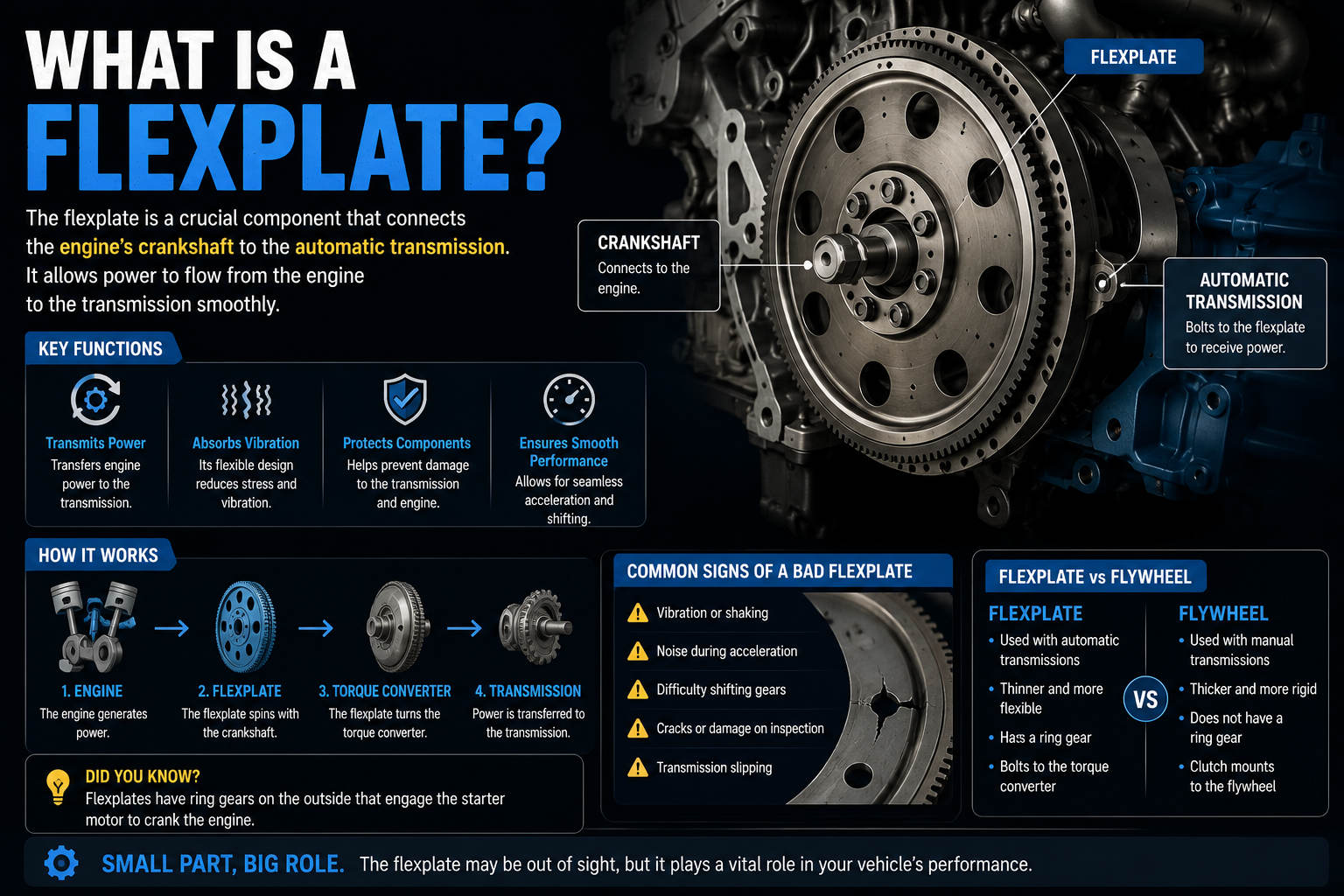
If you’ve ever explored the inner workings of a car with an automatic transmission, you might have come across the term ‘flexplate.’ For those fascinated by automotive engineering or simply wondering what’s going on between your engine and gearbox, getting a clear understanding of the flexplate—how it works, its quirks, and its importance—can shed light on why your car runs smoothly, or why it suddenly develops mysterious noises or vibrations. This guide breaks down everything you ever wanted to know about flexplates, their purpose, how they differ from flywheels, their most common issues, and why they matter so much in automatic vehicles.
As vehicles rely heavily on seamless power transfer from engine to wheels, any component connecting these systems must strike a balance between durability and efficiency. The flexplate plays a unique, behind-the-scenes role in this system, ensuring engines operate smoothly, starters engage reliably, and torque gets transferred effectively, all while quietly enduring significant mechanical stress.
What Is a Flexplate?
A flexplate is a round metal disk, typically constructed from thin, stamped steel, designed to connect the engine’s crankshaft to the torque converter of an automatic transmission. Unlike a flywheel—which is used in vehicles with manual transmissions—a flexplate has to be lighter and slightly flexible, hence its name, and it also features a ring gear welded around its outer edge for engaging the starter motor.
The main role of the flexplate is to transfer rotational energy produced by the engine to the automatic transmission via the torque converter. Its unique design allows it to “flex,” adapting to minor misalignments between the engine and transmission—a crucial property considering the continuous movement and the potential for tiny variations during operation.
Flexplate vs Flywheel: Key Differences
The terms ‘flexplate’ and ‘flywheel’ often get mixed up, but they cater to very different transmission architectures. If you drive a manual vehicle, it’s almost certain you have a flywheel. Automatics, on the other hand, use a flexplate. Here’s how they’re set apart:
- Flywheel (Manual Transmissions): Acts as an energy storage device and friction surface for the clutch. Made from thick, robust steel or sometimes advanced composites, flywheels are heavy to withstand repeated engagement with the clutch, helping to smooth out power delivery from the engine and assist with starting.
- Flexplate (Automatic Transmissions): A lighter, thinner steel disk designed to connect the engine with the torque converter. The flexplate doesn’t need to handle repeated clutch engagement, thus it prioritizes flexibility over mass and is specifically shaped to absorb minor misalignments.
In short, the flywheel focuses on durability and friction, while the flexplate excels at flexibility and lightweight efficiency.
How Does a Flexplate Work?
The flexplate’s integration within the powertrain is deceptively simple but technologically brilliant. It bolts directly to the engine’s crankshaft, with the torque converter fastened on its other side. As the engine spins the flexplate, the movement gets relayed to the torque converter, which uses a fluid coupling to transmit torque to the transmission, facilitating smooth shifting and power transfer in an automatic setup.
During this process, the flexplate’s slight ability to bend (flex) accommodates tiny shifts and misalignments, making it ideal for high-speed rotation and the dynamic nature of automatic gearbox systems. These minute flexes aren’t noticeable to the naked eye—they occur only under the forces generated by engine rotation and torque converter engagement.
Main Roles of the Flexplate
- Energy Transfer: Transfers rotational force from the crankshaft to the transmission through the torque converter.
- Starter Engagement: Features a ring gear on its perimeter that meshes with the starter motor to crank and start the engine.
- Vibration Damping: Slight flexibility helps compensate for minor misalignments and absorbs vibrations, reducing stress on the crankshaft and transmission input shaft.
- Weight Optimization: Being lighter and thinner than a flywheel, it contributes to better fuel efficiency and less rotational mass for the engine to spin up.
Structural Characteristics of Flexplates
A flexplate generally comprises stamped steel, sometimes incorporating machined holes or grooves for balance and weight reduction. Modern flexplates may have more intricate designs to enhance balance and further reduce mass, especially in performance or heavy-duty applications.
- The outer circumference is lined with a ring gear, enabling the starter motor to engage and turn the engine over.
- Flexplates can be found as stamped steel (road vehicles), two-piece billet (racing applications), or one-piece billet for high-stress drag racing scenarios.
- The thinness and reduced mass differentiate them visually and functionally from the denser, heavier flywheel.
The flexibility doesn’t imply you can bend a flexplate by hand; the actual ‘flex’ is incredibly subtle and only occurs under operational forces.
The Importance of Flex in Flexplates
The ‘flex’ in ‘flexplate’ is not just a marketing spin—it serves a crucial mechanical role. As the car engine and transmission are rarely in perfect, fixed alignment (especially given temperature changes and engine movements), the flexplate’s elasticity accommodates these differences, preventing cracks and undue stress.
On the other hand, flywheels are rigid, as the clutch in manuals naturally decouples them during gear changes. Flexplates are always spinning with the crankshaft, thus needing their bit of ‘give’ to prolong service life and reduce the likelihood of breakage.
How Flexplates Differ Between Road and Performance Vehicles
Most road cars use stamped steel flexplates optimized for strength and cost-effectiveness. In contrast, performance or racing vehicles may require more robust, precisely balanced billet flexplates to cope with higher engine outputs and rotational speeds. Some high-performance flexplates are designed not to flex at all, which, while beneficial for certain racing applications, may be excessive or unnecessary for everyday driving.
Common Flexplate Problems and Failure Signs
Flexplates, while engineered for durability, are not immune to wear or failure. A failing flexplate can lead to symptoms that are alarming, irritating, and potentially catastrophic for your vehicle’s drivetrain.
- Starting Issues: A warped or damaged ring gear may prevent the starter motor from engaging correctly. This might manifest as a whining or grinding noise when attempting to start the engine.
- Knocking Sounds: If you hear regular knocking or clunking from the transmission area, particularly while idling in neutral or park, this could indicate a crack in the flexplate, often where it bolts to the crankshaft. The noise might lessen when accelerating, as centrifugal forces mask the flaws momentarily.
- Vibrations: A misbalanced or out-of-true flexplate will cause vibrations felt through the cabin. These may intensify with vehicle speed, signaling a misaligned component or broken balancing weight.
- Metal-to-Metal Grinding: Rhythmic grinding can occur if the flexplate is warped, causing it to rub against the starter drive or transmission cover.
Other Causes of Flexplate Damage
- Out-of-Balance Engine or Torque Converter: If either the engine assembly or torque converter is misaligned, it can rapidly wear or even crack the flexplate.
- Starter Drive Issues: A failing starter can accelerate wear on the ring gear teeth, leading to breakage or bald spots.
- Poor Installation: Flexplate bolts not torqued correctly or not tightened in the prescribed sequence can stress the plate unevenly and lead to eventual failure.
Do Flexplates Really Flex?
This question pops up in technical forums, like one classic discussion on Reddit. The answer is yes, but only under operational stress—meaning the forces exerted on it when the engine and torque converter interact at high speed. The ‘flex’ is engineered so the plate can absorb variations and operate reliably, not so you can see or feel it flex by hand.
Flexplate vs Non-Flexing Flexplate in Performance Builds
Performance enthusiasts sometimes debate between flexible and stiff (often billet aluminum) ‘flexplates.’ Stiffer plates are more expensive and are generally beneficial where strength and precise engine balance are critical—such as high-horsepower builds or pure racing applications. For most daily-driven vehicles, the flexibility and cost-effectiveness of standard stamped steel flexplates usually offer the best compromise.
Diagnosing and Fixing Flexplate Problems
Spotting flexplate issues early is crucial if you want to avoid roadside breakdowns or expensive repairs. Some indicators you’ve got flexplate problems include:
- Engine noise during startup: Whining or loud grinding could mean worn gear teeth on the flexplate.
- Unusual vibrations at speed: These often indicate imbalance or partial detachment.
- Clunking noises at idle: Could be a sign of cracked or broken flexplate mounting points.
Repairing or replacing the flexplate is labor-intensive, as the transmission needs to be removed. Unless you possess significant mechanical skill and the proper tools, this job is best left to trained mechanics.
Flexplate Longevity and Replacement Considerations
Modern flexplates should last the life of the vehicle under normal use, but hard driving, misalignment, or manufacturing defects can dramatically shorten their lifespan. When replacing a flexplate, always ensure you:
- Match the replacement to your exact vehicle and transmission model.
- Torque bolts to factory specifications and sequence.
- Check for alignment and inspect the torque converter and starter drive at the same time.
Cost of Flexplate Repair or Replacement
Flexplates themselves are not prohibitively expensive, but the labor costs for replacing one can be significant, since the transmission must be dropped. Prices for the flexplate range widely depending on application, from modest in common vehicles to specialized and pricey for performance builds.
Frequently Asked Questions About Flexplates
- Can you drive with a cracked flexplate? Technically yes, but it is highly unsafe and can further damage your engine, starter, or transmission. Address any flexplate issue immediately.
- Is a flexplate used in manual transmissions? No, manual transmissions use a flywheel, not a flexplate.
- Will a flexplate fit any car? No, always choose a flexplate specified for your exact engine and transmission configuration.
How Flexplate Design Has Evolved
As automotive engineering moves forward, flexplates have been refined for better balance, lighter weight, and greater strength. Some modern units use carbon composites or high-strength steel alloys, and innovative designs with carefully placed holes help further cut weight and balance out rotation, contributing to improved fuel economy and a smoother ride.
Manufacturers continually seek the perfect mix of durability and lightness, but even so, operating conditions, vehicle type, and driving habits will always play a significant role in flexplate reliability.
Understanding what a flexplate is and how it works gives vehicle owners a significant advantage when troubleshooting drivetrain issues or planning performance upgrades. Choosing the right type, properly maintaining the vehicle, and catching early signs of failure can prevent costly repairs and ensure smooth operation for many miles to come.