
- Bell housings provide structural support, alignment, and protection for critical engine and transmission connections.
- Precision alignment of the bell housing minimizes vibration, improves performance, and extends component lifespan.
- Material, design, and compatibility considerations are essential for high-performance and industrial applications.
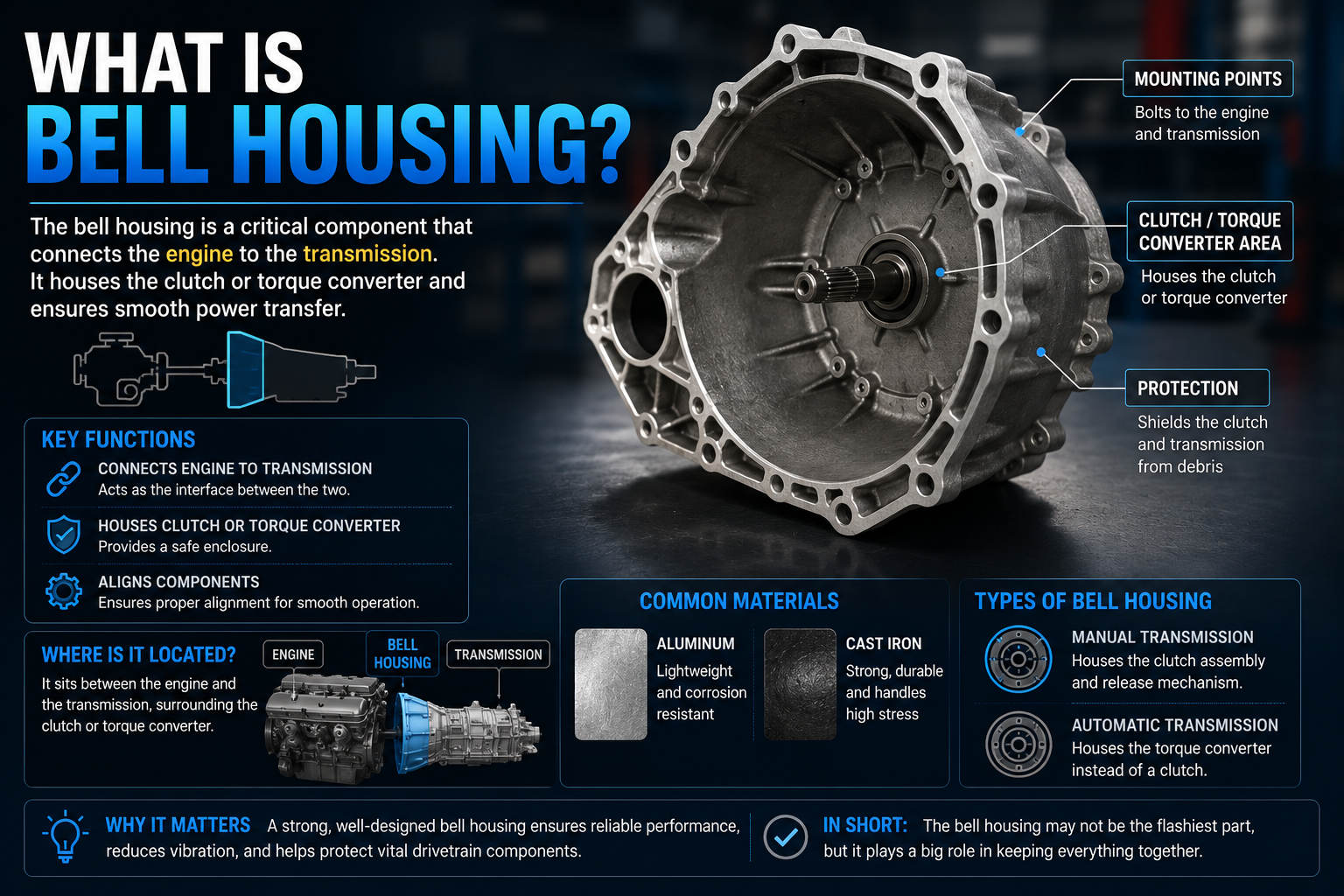
If you’ve ever dug into the workings of a vehicle or a motorized industrial system, you’ve probably come across the term ‘bell housing’. But unless you’re steeped in the world of auto repairs or hydraulic systems, the details about what a bell housing actually does, how it fits into various setups, and why it matters may still be fuzzy. Let’s demystify the bell housing by breaking down its roles, designs, and practical considerations, bringing intricate technical details into everyday language—whether you’re a seasoned builder, an enthusiastic hobbyist, or simply curious.
The function of the bell housing goes far beyond being just another part you might find bolted onto your engine. It’s a critical interface between the major moving components of an engine, transmission, or hydraulic system. Not only does it create a structural bridge, but also contributes directly to how effectively power is transferred, how smooth your system operates, and how long key components will last. Understanding bell housings may sound like expert territory, but the basics (and some not-so-basics) can make your projects safer, smoother, and more reliable.
What Is a Bell Housing?
The bell housing is a core component that acts as a tough protective enclosure, typically found in automotive, industrial, and hydraulic machine setups. Its most literal purpose is to house and protect the rotating linkage between an engine or electric motor and the following transmission or pump. Usually shaped like—but not always exactly—a bell, its rounded contours shield one of the most sensitive junctions in any drive system: the area where rotating force (torque) is handed off from one component to the next.
In cars and trucks, the bell housing can be found between the crankshaft and the transmission. For hydraulic systems, such as those used in heavy machinery or industrial fabrication, the bell housing typically links an engine or motor to a hydraulic pump. Either way, the essential jobs are the same: it ensures components are properly aligned, reduces vibration, supports efficient torque transfer, allows access for maintenance, and protects against dust, debris, or even catastrophic mechanical failure.
Main Roles and Functions of a Bell Housing
- Connection and Alignment: The bell housing securely bolts to the engine (or motor) on one side and to the transmission or pump on the other. Its mounting surfaces are manufactured with precise tolerances to keep everything on the same axis, minimizing the risk of mechanical wear and ensuring smooth transmission of rotational motion.
- Vibration Dampening: By providing a solid, rigid enclosure and supporting strategic alignment, the bell housing helps isolate and dampen the vibrations that can occur when power is handed off between moving parts. Less vibration means a quieter ride, smoother operation, and extended component life.
- Structural Support: The robust metals or composites used to create bell housings (from cast aluminum to forged or sheet steel) add vital strength at this key junction point—especially crucial in racing or heavy-duty applications.
- Protection and Safety: Situating essential moving parts (like the flywheel, clutch, or drive coupling) within the bell housing means they’re less exposed to the environment. Should a catastrophic failure occur—say, a clutch or flywheel explosion—the bell housing is designed to contain shrapnel and protect both the machine and nearby personnel.
Bell Housing Applications: Automotive and Industrial Uses
While the roots of bell housing use trace back to automobiles, its importance stretches into a wide variety of modern machines.
Automotive Bell Housings
In passenger vehicles, especially those with manual transmissions, the bell housing links the rear of the engine block to the front of the gear transmission. It encases the flywheel and clutch assembly (or torque converter in automatic transmissions), keeping them safe and preventing grime, moisture, and road debris from entering.
For classic muscle cars or restomods, upgrading to newer, more robust transmission setups often requires changes in bell housing types and alignment. Even if a newer 5- or 6-speed transmission bolts directly to an older bell housing, proper alignment is essential to avoid premature clutch wear, noisy operation, or shifting trouble. If the bell housing was removed or swapped during engine or transmission upgrades, realigning it is vital for optimal performance and warranty coverage.
Hydraulic Systems and Industrial Motor Setups
Beyond cars, bell housings are found in hydraulic drive systems where they link an internal combustion engine or electric motor to a hydraulic pump. The mechanical stresses (torque, vibration, heat) in these setups are often extreme, so careful selection and alignment of the bell housing and drive coupling are emphasized even more. These bell housings are tailored for specific engines or frame sizes, and top-tier performance requires a careful matching of housing to intended use.
Bell Housing Components and Related Parts
- Flywheel: A heavy disc attached to the end of the engine’s crankshaft. In manual transmissions, it interfaces with the clutch plate to connect or disconnect the engine from the transmission. For alignment and performance, the flywheel must be perfectly parallel and concentric with the crankshaft and the bell housing.
- Clutch (or Torque Converter in Automatics): Enclosed within the bell housing, the clutch lets the driver engage or disengage the engine power to the transmission. In automatics, the clutch is replaced by a torque converter with a similar function.
- Drive Coupling or Shaft: In hydraulic and industrial applications, the drive coupling transmits power from the engine to the pump shaft. It sits inside the bell housing and is often a critical match-point for compatibility, vibration resistance, and torque transmission.
- Input Shaft Bearing: This supports the shaft that enters the transmission and is critical for silent, smooth operation. Poor alignment of the bell housing can quickly wear this out.
- Bellhousing Alignment Tools & Offset Dowel Pins: Specialized hardware and measuring tools are available for checking and correcting bell housing alignment. Offset dowel pins compensate for distortions or imperfections in mounting surfaces.
Material Choices and Safety Ratings
Bell housings are fabricated from different materials depending on the intended use:
- Aluminum: Commonly used in standard vehicles for its light weight and good heat dissipation. Modern manufacturing can produce strong, highly precise aluminum housings.
- Steel: Preferred (and sometimes required by racing regulations) for high-performance, motorsports, or heavy-duty applications. Steel bell housings offer maximum strength and impact resistance.
Motorsport bell housings are typically tested and certified to SFI specifications such as 6.1, 6.2, or 30.1. These certifications guarantee the bell housing’s ability to contain clutch or flywheel failures at extremely high RPMs, adding a level of safety for both the equipment and the occupants.
Types of Bell Housings: Matching Engines, Transmissions, and Pumps
There isn’t a one-size-fits-all approach to bell housings. Differences in engine block bolt patterns, flywheel or clutch diameters, depth from the engine to the transmission face, and transmission input shaft length all play a role in specifying the right bell housing.
- Certain manufacturers—like Ford or General Motors—have multiple patterns and sizes that are incompatible across different engine/transmission combinations. It’s common practice to consult pattern lists or manufacturer guides to match your application precisely.
- For hydraulic systems, bell housings are tailored for gasoline, diesel, or electric motors by considering frame sizes, mounting patterns, intended torque loads, and compatibility with particular drive couplings and pumps.
Be sure to reference the Ford Bellhousing Patterns or GM Bellhousing Patterns when selecting or upgrading for automotive uses.
The Importance of Proper Bell Housing Alignment
One point where many DIY installations go wrong is in the alignment of the bell housing to the centerline of the crankshaft. Even minute misalignments can set off a domino effect of problems—poor gear shifting, odd noises, clutch chatter, unusual vibration, and rapid wearing out of bearings and bushings. For high-performance systems, precision becomes absolutely critical.
Standard and High-Performance Alignment Specs
- Standard automotive tolerance: +/- .005” concentricity (total indicator runout, TIR), +/- .001” parallelism (TIR)
- Racing, hi-performance tolerance (over 7,500 RPM): +/- .0025” concentricity, +/- .0005” parallelism
- Flywheel runout should be between .001” and .005” max for best results
Meeting these specs means that both the center axis and face plane of the bell housing must line up precisely with the engine’s crankshaft and flywheel. It’s especially vital in high-RPM applications to prevent issues down the line.
How to Check and Adjust Bell Housing Alignment
The best way to ensure proper alignment is through careful measurement:
- Clean all mating surfaces. Remove rust, old paint, gasket debris, or anything else that could interfere with flush metal-to-metal contact. Pay special attention to dowel pins used for initial alignment.
- Secure the flywheel. Attach the flywheel to a rust-free crankshaft flange, tightening bolts to the correct torque specs.
- Set up a dial indicator. Attach it (magnetically or otherwise) to the engine block or crankshaft flange. Zero out the dial indicator, select a reference point (for example, TDC or ‘12:00’ on the clock face), then slowly rotate the crankshaft 360 degrees to check for deviations.
- Note minimum (negative) and maximum (positive) readings. The total swing, or ‘total indicator runout’ (TIR), indicates how far the bell housing or flywheel is from being perfectly aligned.
- If out of spec, adjust alignment. Use offset dowel pins (for concentricity) or shims (for parallelism) between the bell housing and engine block. Correcting within the specified tolerances is essential, especially in high-performance builds.
Bear in mind that proper alignment isn’t just during initial assembly. If any component that affects the bell housing—such as transmissions, clutch setups, or engine machining—is changed, the process should be repeated. Record TIR measurements and consult manufacturer data, such as the guide from Bowler Transmissions.
Offset Dowel Pins and Adjustment Techniques
Offset dowel pins come in various sizes, allowing corrections for different misalignment levels. To use them:
- Install offset pins into the engine block, pointing the high side toward the maximum positive TIR reading on your dial indicator.
- Drill and tap a small set screw into the block next to each dowel pin to lock it in place after adjustment.
- Re-tighten bell housing bolts and re-check alignment after each modification.
While this process can be intricate, investing time here results in lower maintenance costs, fewer issues, and enhanced durability of your setup.
Common Signs of Poor Bell Housing Alignment
- Difficult, inconsistent, or crunchy shifting.
- Unusual noises under load, especially during clutch engagement or at high rpm.
- Vibrations that change or diminish with shifting or load.
- Uneven wear on input shaft bushings and transmission bearings.
- Increased clutch or flywheel wear.
Detecting these symptoms early by checking the bell housing alignment can prevent larger problems and costly repairs down the line.
Designs and Features That Affect Performance
Not all bell housings are created equal. Important design elements include:
- Structural rigidity: Thicker flanges and strong casting materials help maintain alignment under stress.
- Vibration control: Internal ribs and appropriate materials help absorb energy, especially in high-RPM or high-torque conditions.
- Heat dissipation: Design choices that promote cooling prevent overheating during extended operation.
- Maintenance access: Features like service ports, removable covers, or modular parts simplify ongoing maintenance or quick repairs.
Drive Couplings and Their Integration with Bell Housings
Drive couplings connect rotating shafts—like engine to pump—and are critical for reliable power transfer. Proper installation ensures effective load management and shock absorption. Bell housings typically contain or protect these couplings, making compatibility essential for performance and safety. Key considerations include:
- Mounting compatibility: Matching bolt patterns and clearances.
- Load capacity: Ensuring couplings handle the expected torque and shock loads.
- Vibration damping: Selecting couplings that work with the bell housing to reduce vibrations.
- Environmental resilience: Materials suited for high-temperature or chemically harsh environments.
The Manufacturing and Customization Side
Advances in bell housing design focus on using better materials, tighter manufacturing, and custom solutions. Companies such as Browell Bellhousing provide SFI-certified models in aluminum or steel. For racing or industrial applications, customization options include reinforcement, venting, or cooling features. Rigorous testing ensures these housings withstand extreme conditions and meet safety standards.
Additional accessories like debris filters, billet clutch forks, and alignment tools are available for enhanced reliability and safety in demanding scenarios.
Maintenance Tips for Long-Lasting Performance
Though built to last, proper care prolongs the lifespan of your bell housing. Consider the following:
- Keep mating surfaces clean and free of rust, paint, or debris.
- Regularly check dowel pins and replace or realign if needed.
- Apply correct torque on bolts to ensure even distribution of load.
- After any major change, recheck alignment.
- Inspect regularly for leaks, cracks, or stress signs, especially in high-stress applications.
- If unusual vibrations or shifting persist, verify bell housing alignment promptly.
Consistent maintenance and attention during assembly contribute significantly to reliability and performance over time.
Choices and Considerations for Your Next Project
Whether updating a vintage car with modern transmission technology, building a robust hydraulic system, or optimizing for racing, understanding and properly installing your bell housing is fundamental. Select suitable materials, accurately match all interfaces, follow precise alignment procedures, and consider customization when necessary.
If in doubt, consult specialized vendors or manufacturers with proven expertise. Brands offering SFI-certified housings and alignment kits often provide invaluable technical guidance based on real-world experience.
The humble bell housing, far from just being a metal shell, plays a crucial role in power transfer, system efficiency, and safety. Proper selection, installation, and alignment are key to achieving better performance, greater confidence, and long-lasting operation, whether on the track, in restoration, or industrial maintenance.