
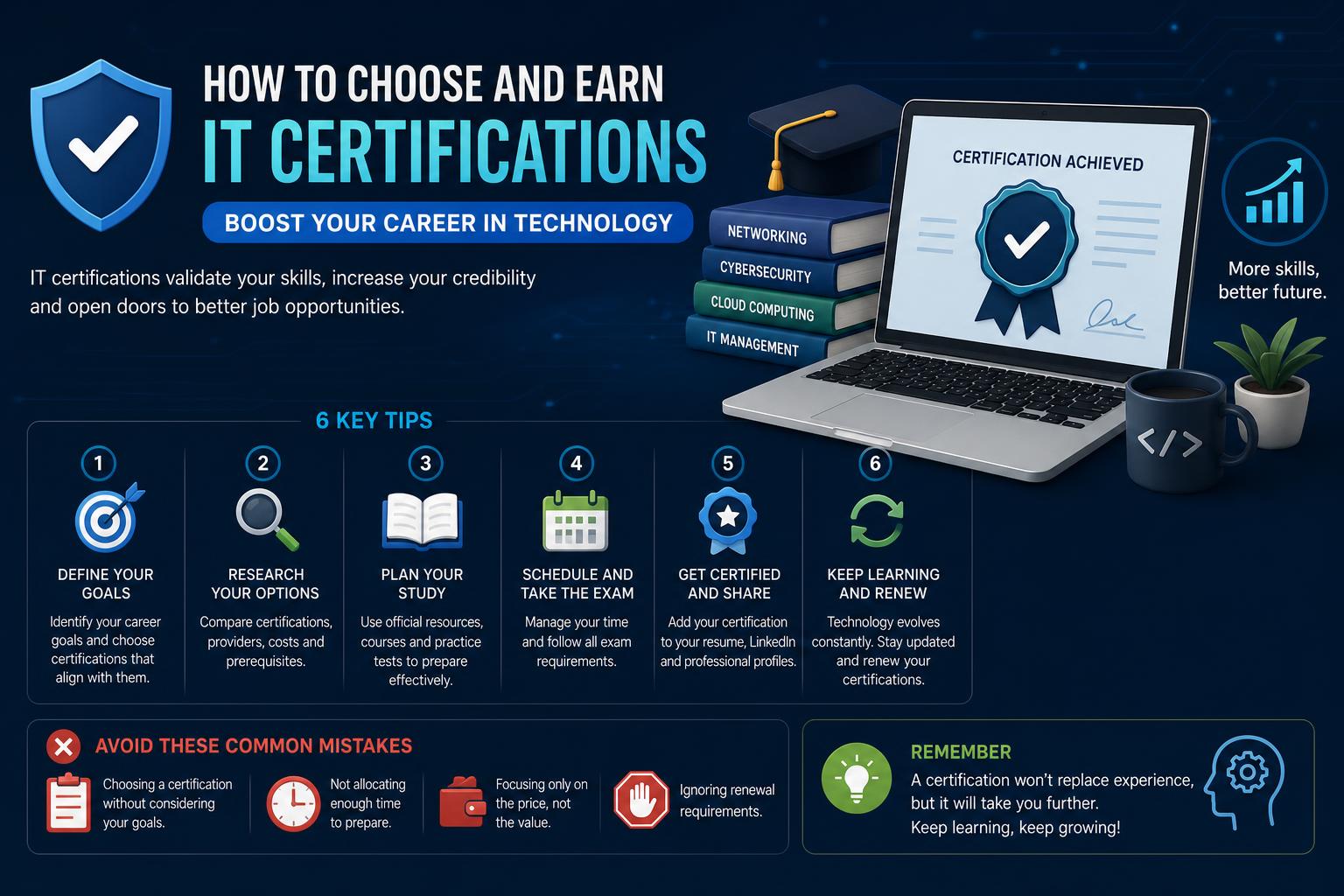
- IT certifications validate your technical skills and enhance job prospects worldwide
- Entry-level credentials such as CompTIA A+, Network+, and CCNA are valued by employers
- Specialized and advanced certifications support career progress in cybersecurity, cloud, and project management
The world of technology certifications can seem overwhelming when you first start exploring your options. With new tech roles emerging and the industry evolving at breakneck speed, credible certifications are a proven way to validate your expertise, strengthen your career prospects, and boost your earning potential. If you’re considering a career in IT or looking to grow within the industry, understanding the range and value of leading certifications is essential for your success.
Whether you’re a curious beginner or a seasoned professional seeking new challenges, pursuing the right IT certifications can be your passport to more fulfilling roles in networking, cybersecurity, cloud computing, and beyond. In this article, we’re going to break down everything you need to know about certifications in information technology — from their core benefits to the most respected entry-level and specialized credentials, pathways to success, and essential tips to maximize your certification journey.
Understanding IT Certifications: What They Are and Why They Matter
IT certifications are official recognitions awarded after passing specific examinations that assess your knowledge, skills, and practical competence in particular technology domains. They’re not just nice-to-haves; many employers use them as a benchmark for hiring and promotions. Highly respected organizations, including CompTIA, Cisco, Amazon Web Services, GIAC, and Microsoft, offer globally recognized certifications that set industry standards for knowledge and capability. These credentials are concrete evidence of your technical expertise and ability to apply skills in real-world settings.
Earning certifications is more than a formality — it’s a commitment to professional growth. Whether you’re seeking credibility as you enter the field or aiming to showcase deep expertise for advanced roles, certifications make you more visible and trusted in the eyes of employers. They’re increasingly relied upon for hiring, advancement, and even as prerequisites for specialized roles.
The Big Benefits of IT Certifications
- Global Industry Recognition: A well-known certification instantly validates your expertise and signals your commitment to staying up to date in a rapidly changing landscape. This recognition helps you break into competitive job markets and grabs the attention of recruiters worldwide.
- Concrete Validation of Skills: Certifications are more than theoretical—they prove you can do the work, often combining knowledge-based and performance-based exam elements. This validation helps companies trust you with responsibilities that may otherwise go to more experienced (but uncertified) candidates.
- Career Advancement and Higher Salaries: Multiple salary studies have shown that IT professionals who hold respected certifications enjoy more interviews, better starting offers, and accelerated promotions. Some sources report certified specialists can earn tens of thousands more per year than their uncertified counterparts.
- Entry Into Specialized and Advanced Roles: Certain positions, especially in cybersecurity, networking, or cloud, are only attainable if you hold the right credentials. Foundational certifications also unlock access to advanced courses and specialty training, helping you build a future-ready skill set.
Why Begin with Entry-Level Certifications?
If you’re new to IT, entry-level certifications are your launchpad. They’re built to provide a broad, foundational understanding of core technology concepts — ideal for students, career changers, or anyone wanting to see if IT is the right fit. The best part is that most entry-level credentials require no prior experience, so you don’t need a formal computer science degree to get started. Benefits of entry-level certifications include:
- No Prior Experience Necessary: Designed for absolute beginners, these exams start with the basics and help you build confidence.
- Comprehensive Coverage: They touch on multiple tech domains, giving you a taste of networking, cybersecurity, cloud, and support before you choose a path to specialize in.
- Immediate Relevance and Affordability: Skills learned apply to real-world jobs and, since many are affordable, they’re an attainable first step for most learners.
The Most Valued Entry-Level IT Certifications
The following certifications tend to appear over and over again in employer requirements, career guides, and industry roadmaps. Let’s explore each, their unique strengths, typical requirements, and ideal candidates.
CompTIA ITF+ / Tech+ Certification
This credential (previously known as CompTIA IT Fundamentals) is the most basic certification for those considering whether IT is right for them. It explores foundational topics like operating systems, system support, cybersecurity fundamentals, emerging technologies, hardware basics, and more.
- Who should consider it? Students, career changers, and non-technical professionals looking to gain digital literacy, or anyone who wants a verified understanding of core IT principles.
- No prerequisites: Absolutely no IT experience is needed—just an interest in technology and a willingness to learn.
The CompTIA ITF+ is vendor-neutral, meaning the knowledge applies across all types of technology environments and prepares you for further certifications such as the CompTIA A+.
CompTIA A+ Certification
The gold standard for IT support and desk technician roles, CompTIA A+ covers troubleshooting, hardware, software, mobile devices, networking, virtualization, operational procedures, and basic security. To earn the A+, candidates must pass two comprehensive exams (Core 1 and Core 2).
- Who’s it for? Aspiring help desk professionals, field service technicians, desktop support administrators, and others looking for a foundational, in-demand credential.
- Vendor-neutral: Skills apply across a wide variety of operating systems, devices, and troubleshooting scenarios.
- Progression: Completing the A+ opens doors to advanced certifications in networking (Network+) or security (Security+).
CompTIA Network+ Certification
This globally recognized credential validates a strong foundation in networking fundamentals. It’s a vendor-neutral alternative to entry-level Cisco exams and recommended for those aiming for roles in network support, administration, or who simply want a well-rounded understanding of networking technology.
- Who benefits most? IT professionals preparing for their first networking role (administrator, technician), as well as network installers and help desk specialists targeting skilled progression pathways.
- Recommended background: While not strictly required, prior A+ certification or equivalent knowledge is suggested. A year or so of hands-on networking experience is also helpful.
CompTIA Security+ Certification
This is often the first credential security-minded professionals pursue. The certification tests your ability to secure networks and devices, apply risk management practices, monitor environments, and remain compliant with governance standards. It also covers securing hybrid infrastructures, such as cloud, mobile, and IoT devices.
- Who is it for? Anyone looking to break into cybersecurity or expand their IT admin credentials to include security fundamentals, with a focus on practical skills employers crave.
- Prerequisites: Typically, at least two years of IT administration experience (preferably with some focus on security), though ambitious beginners can fast-track it with focused study.
- Career impact: Security+ is globally respected, ANSI accredited, and cited by employers as a must-have for many mid- to entry-level security roles.
Cisco Certified Network Associate (CCNA)
Cisco stands as a leader in enterprise networking, and their CCNA certification is highly prized. The CCNA demonstrates your ability to manage modern networks, covering essentials like network access, connectivity, IP services, automation, and security—albeit within Cisco’s hardware and software ecosystem.
- Who should take it? Professionals looking to work in network infrastructure, especially those aspiring to work with Cisco gear and tools. It’s a popular badge for network specialists, administrators, and engineers.
- Requirements: There are no strict prerequisites for the exam, but Cisco suggests candidates have a year’s hands-on experience with networks. This ensures you get the most value out of the material covered.
- Career pathway: After CCNA, professionals often advance to the Cisco Certified Network Professional (CCNP) or other specialist credentials as their expertise deepens.
Popular Mid-Level and Specialized IT Certifications
Once you’ve mastered the basics with foundational certifications, you can then pursue more specialized or advanced credentials. Here are a few of the most employer-recognized certifications for mid-level and specialized IT pros:
GIAC Information Security Fundamentals (GISF)
GISF offers an introductory insight into cybersecurity and essential security practices. Recommended for those who wish to expand their understanding of networking, cryptography, risk management, and security basics in business environments. It’s valuable not just for IT practitioners, but also managers and administrators who need working knowledge of security issues.
Google Cloud Digital Leader
As cloud computing continues its rapid adoption, understanding the basics of the leading platforms becomes critical. The Cloud Digital Leader certification from Google introduces you to cloud concepts and Google Cloud services. While most cloud roles require deeper or higher-level credentials, starting with the Digital Leader badge can help you better evaluate and work in cloud-centric environments.
Amazon Web Services (AWS) Certified Cloud Practitioner
For those interested in cloud careers, AWS’s entry-level practitioner certification covers the essentials of the world’s most used cloud platform. You’ll demonstrate foundational knowledge of the AWS Cloud, including its key services, security, pricing, and use cases. The practitioner rank does not require prerequisites, but AWS recommends six months’ exposure to the platform for best results.
Certified Associate in Project Management (CAPM)
Although not exclusively IT, the CAPM credential is highly respected for aspiring project managers, especially in tech environments. With IT projects increasingly complex and cross-functional, project management skills can accelerate your transition from technical contributor to influential leader.
IT Specialist: Broader Coverage and College Credit
The Information Technology Specialist program enables candidates to validate their foundational IT knowledge across various disciplines, from software development and networking to security and database administration. Particularly helpful for those starting out or considering a shift into IT, the program also has the advantage of offering up to three college credits per exam passed (as recognized by the ACE Learning Evaluations).
Certification Paths and Progression Routes
IT certifications are rarely isolated achievements—you’ll build on foundational badges as you specialize or climb the career ladder. A typical pathway might start with a broad foundational certification (such as CompTIA ITF+, A+, or Network+), move into vendor-specific technologies (CCNA for Cisco, AWS Cloud Practitioner), then progress to advanced credentials like Security+, CCNP, or specialty cloud or cybersecurity certifications.
Many credential providers offer roadmaps and guidance. For example, after achieving CompTIA A+, candidates may pursue Network+ or Security+, while CCNA opens opportunities to dive into more specialized Cisco tracks like CCNP or solutions focused on security or wireless networking. To see official pathways and stackable credential suggestions, use resources from certification providers or training experts like Certiport and Pearson IT Certification.
How to Select the Right Certification for Your Goals
With so many credentials available, how do you choose the best ones for your career?
- Assess your career interests: Figure out if you lean toward help desk, networking, cloud, security, or other specialized areas. For network roles, Network+ or CCNA are logical starts; for security, Security+ or GISF are early favorites.
- Consider costs and study resources: Some exams are more affordable than others, and study resources can vary in availability and pricing. Look for courses, free materials, and practice exams to help you prepare affordably. Training platforms like ONLC, Coursera, and Udemy provide comprehensive options.
- Check employer requirements: Browse job postings for your target roles and note common certification requests or preferences.
- Assess your skill level and knowledge gaps: Choose certifications that both fill gaps and highlight your strongest areas, ensuring your investment delivers real value to your career.
Preparing for IT Certification Exams: Proven Strategies
Once you’ve picked a credential, preparation is your key to success. Here are essential tips that can truly make a difference:
- Leverage Official Study Materials: Certification vendors, such as CompTIA and Cisco, offer study guides, official books, online learning platforms, and practice exams. These resources are tailored to the exam content and structure.
- Participate in Online Communities: Forums, Discord servers, and social media groups can connect you with fellow candidates, enabling knowledge sharing, motivation, and access to up-to-date insights.
- Prioritize Practice Exams: Simulating exam conditions with practice questions boosts your confidence and reveals any knowledge gaps well before your test date.
- Allocate Consistent Study Time: Set a regular schedule and stick to it. Consistency is more important than marathon cramming sessions.
- Choose Interactive Learning Options: Consider instructor-led classes, video tutorials, interactive labs, or simulation-based training from reputable providers like ONLC or Pearson IT Certification.
FAQs: Common Concerns about IT Certifications
Are foundational certifications worth it for entry-level roles?
Absolutely. Foundational credentials provide the baseline knowledge and confidence necessary for technical interviews and onboarding. Employers use these as a way to shortlist candidates, ensuring they have a verified grasp of essential concepts even without formal degrees or years of experience.
Must I have a computer science degree to work in IT?
No. Demonstrating relevant skills and certifications matters just as much—and sometimes more—than a traditional degree. Many companies prioritize practical skills, hands-on learning, and credential validation over formal education, particularly for technical support, network, and entry cybersecurity roles.
Are there beginner-friendly certifications specifically for cybersecurity?
Yes, both CompTIA Security+ and GIAC Information Security Fundamentals (GISF) are designed as accessible on-ramps into cybersecurity. They start with the basics, teach best practices, and are widely acknowledged as credible by employers worldwide.
What certifications help with systems administration careers?
Beyond foundational badges, specialized certs like CompTIA Server+ or Microsoft’s MCSA (Microsoft Certified Solutions Associate) are excellent choices. They focus on critical areas like server management, troubleshooting, and networked systems environments.
Is project management important for IT professionals, and which certifications help?
Yes, as IT work often involves cross-team collaboration and delivery of complex projects. Credentials like the Certified Associate in Project Management (CAPM) provide valuable frameworks for organizing, executing, and successfully closing technical projects.
IT Certifications and Career Growth: What the Research Says
According to research from trusted firms like Robert Half, a significant majority of tech leaders now offer above-average salaries for professionals who demonstrate specialized credentials. High-impact skills such as cybersecurity, data analysis, enterprise systems, and cloud computing are commanding premium pay. Pairing complementary certifications (for example, cloud with AI or security with networking) can further maximize your marketability in 2027 and beyond.
Certifications not only affirm your readiness for challenging roles but may also unlock college credits, tuition discounts, and exclusive job boards. For example, the American Council on Education recognizes many IT Specialist exams for academic credits, while programs like Google’s IT Support Professional Certificate grant access to exclusive hiring consortia for graduates.
Program Integration: Earning Certifications during Degree Studies
Some universities and technical programs, such as ECPI University and GCU, integrate certification preparation into their course offerings. These programs may cover exam fees or provide discounted rates to encourage students to earn credentials alongside their degrees. However, it’s important to remember that certification outcomes depend on personal effort and that meeting degree requirements does not automatically guarantee a pass—additional self-study and practice may be required.
Following Industry Trends and Keeping Skills Updated
The IT landscape changes quickly; staying up-to-date is critical. Bookmark reputable IT glossaries, subscribe to career newsletters like Career Chat, and participate in ongoing professional development. Engaging with continuous learning and regularly updating your certifications ensures you’re always ready to tackle new technologies and industry demands.
Taking the First Steps toward an IT Career
The journey begins with choosing your first certification, but it doesn’t stop there. Every successful technology professional started with a foundational credential — the sooner you take that initial step, the sooner a world of high-growth opportunities is available to you. Explore training options from providers like ONLC, Coursera, Pearson IT Certification, and others to start building a path tailored to your goals, budget, and preferred learning style. By keeping your skills fresh, prioritizing credentials that match your ambitions, and making use of all available resources, you’ll position yourself to stand out in any IT hiring market. The right certification can be the key that opens doors to your dream job and sets you up for continued success in the ever-evolving world of technology.