
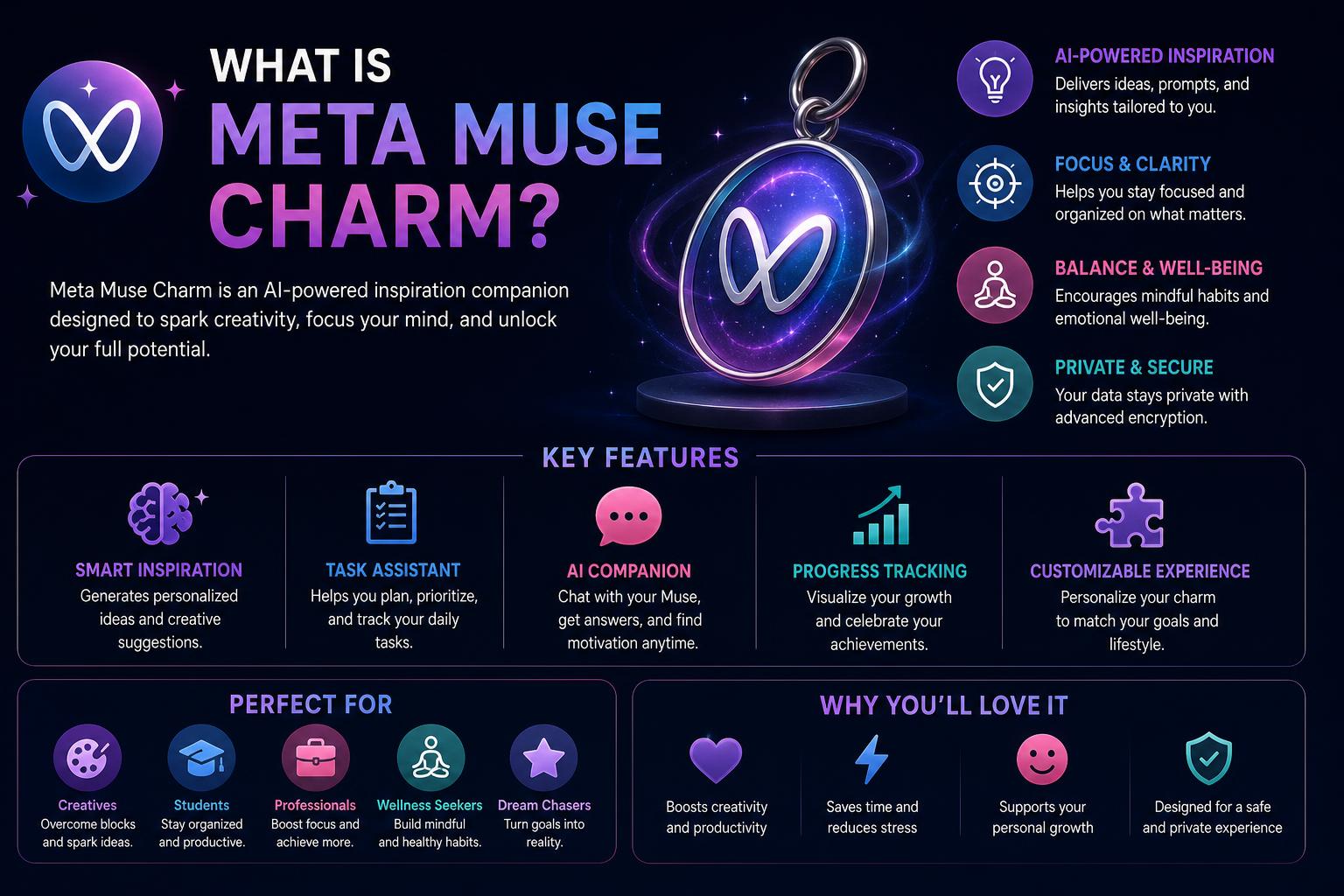
- Meta Muse Charm is a portable AI assistant with a strong focus on cuteness and user engagement.
- It combines advanced features like 5G connectivity, touch screen, and camera, offering seamless on-the-go interaction.
- The device represents a shift toward more accessible, emotionally engaging, and customizable AI gadgets.
Suddenly, everyone is talking about the Meta Muse Charm. In a tech world dominated by sleek but often impersonal smart devices, Meta has taken a surprising turn: they’ve released a tiny device packed with artificial intelligence that looks more like an adorable keychain pet from the late ’90s than a high-tech gadget. It’s a move that’s sparking both curiosity and debate across generations, pundits, and gadget lovers alike.
But what is the Meta Muse Charm? Why has Meta, a giant known for bold social experiments and controversial hardware, decided to bet on a talking, animated mascot you can clip to your bag? Let’s dive deep into the features, technology, inspiration, and the cultural impact of this seemingly simple but deeply strategic device.
Breaking Down the Meta Muse Charm
The Meta Muse Charm is a compact, AI-powered gadget designed to be an ever-present digital companion. Think of it as the next evolutionary step in personal assistants—except cuter, more interactive, and with much more personality than a disembodied voice inside your phone or speaker.
This isn’t just an upgrade of smart speakers or glasses. It’s a dedicated piece of hardware: small enough to fit on your keychain or dangle from your backpack, equipped with a two-inch OLED touchscreen displaying a cartoonish, reactive avatar. The charm is designed to anthropomorphize technology—giving it a near-pet-like quality, blending nostalgia, playfulness, and utility.
Features and Technical Specs
- Two-inch OLED Touchscreen: The display acts as the animated face of the Muse AI, reacting to your queries and drawing users into a more engaging interface.
- Fingerprint Sensor: Integrated for swift, secure access—one tap and you’re ready to interact with your AI assistant.
- Built-in 5G Modem: Unlike many portable devices, the Muse Charm functions independently of Wi-Fi. With on-board cellular connectivity, you can talk to Muse anywhere there’s a signal.
- Cameras and Visual Processing: The device is equipped with cameras—not just for selfies or video calls, but to allow the AI to “see” and process its environment, enabling richer, context-aware interactions.
- Speakers & Microphones: The Muse Charm isn’t just for silent communication; it can play music, videos, and has voice input/output for hands-free operation.
- USB-C Charging: Modern connectivity ensures fast charging and easy compatibility with existing accessories.
- Setup via Mobile App: You can customize and manage the device through the official Muse app from Meta on iOS or Android.
Put simply, this is more than a toy—it’s a powerful AI assistant you can carry anywhere, always ready to help or amuse you.
What Does Muse AI Do?
Meta Muse Charm is powered by Muse, Meta’s personal AI agent. Think of Muse as the logic and intelligence engine behind the cute face; it manages your personal tasks, information, and requests as soon as you press and interact with the Charm. Here’s what it offers:
- Conversational Assistance: Just press the device and speak—Muse can book travel, schedule meetings, answer emails, or even order your groceries.
- Task Management: Hands full? Muse can perform background tasks and run errands virtually, helping streamline your daily life.
- On-device Reactions: The mascot’s reactions—winks, nods, animated faces—create a low-key but surprisingly meaningful social cue, making digital interaction feel playful and less intimidating.
- Photo and Video Functions: Thanks to its cameras, you can also take photos or videos, transforming the way you document your day.
- Media Playback: With built-in speakers, playing your favorite tunes or podcasts is a breeze wherever you are.
Why Does It Look Like a Tamagotchi?
Muse Charm’s design is a deliberate departure from the cool minimalism of most wearables. Instead, it leans into nostalgia and the universal appeal of ‘cute’ technology.
Cuteness is intentional and strategic. According to Katie Seaborn, an associate professor at Cambridge and expert in the science of cuteness and technology, the Muse Charm is purposefully shaped and animated to evoke a “baby-like” response. This strategy, popularized in Japan, leverages our tendency to lower our guard and trust objects that appear vulnerable or disarming. As Seaborn notes, “It’s very natural to emerge from tech controversies with a product that simply looks cute and trustworthy—even if it’s actually very powerful under the hood.”
Cultural Influences and Generational Responses
Meta’s approach is rooted in trends from Japanese pop culture, where nearly every company, government agency, or organization has a mascot. The strategy isn’t just about nostalgia for Tamagotchis or Pikachu—the goal is to package high-tech AI in a format that’s less intimidating and more approachable across age groups.
The generational effect is real:
- Generation Alpha (the youngest users) might dismiss the avatar’s cuteness as “so AI”—an attempt to connect, even if it’s perceived as inauthentic.
- Generation Z, already accustomed to plush toys hanging off their bags, could see it as a fun, seamless transition to real digital companions.
- Older generations might find a sense of nostalgia, recalling older interactive gadgets like Tamagotchi or early virtual pets, but also weigh the trust and privacy implications differently.
Cultural differences also influence perceptions: Seaborn’s research highlights that Americans tend to be more skeptical of cute technology as a potential tool for surveillance or deception, whereas Japanese users view robots and mascots as friendly, trustworthy helpers. This cultural context is crucial in understanding how the Muse Charm will be adopted globally.
The Technology Packed in a Tiny Package
What truly sets the Muse Charm apart is its tech stack. Unlike typical AI assistants tied to apps or speakers, the Charm is independent, using its 5G connection for data and communications anywhere you go. The combination of an interactive screen, fingerprint sensor, and onboard cameras is rare for a device of its size. Additionally, it doesn’t need to rely on your phone—the AI agent is built right in for instant use.
Setup is simple: Download the Muse app on Android or iOS, pair your Charm, and start customizing. While the basic appearance of the character is fixed for now, Meta is expected to offer additional customization options—continuing the online trend of personalizing digital mascots and reactions to reflect individual styles and moods.
Privacy, Cameras, and Trust—A New Conversation
Meta’s decision to embed the AI’s camera in the Charm—rather than in smart glasses—reflects lessons learned from recent privacy debates. Devices with always-on cameras have raised concerns; placing the camera visibly in an approachable object is Meta’s way of promoting transparency and consent.
However, this move isn’t universally accepted. Social researchers and consumers remain divided: some are drawn to its transparent design, while others remain cautious. As The Guardian pointed out, “If the camera is contained in a charm you wear around your neck, it shifts the agency. You’re not recording people, it’s just a cute little animated avatar looking out on the world.” The sense of control and visibility could aid in gaining trust, especially among casual users wary of hidden surveillance.
Interaction—Both Human and Device-to-Device
One of the most innovative features is the Muse Charm’s ability to interact with other nearby Charms. According to The Verge, the device can recognize and communicate with other Charms in proximity. This opens possibilities for digital socializing, where mascots could meet, exchange information, display animations together, or even initiate small games—making them both personal assistants and social connectors in the real world.
Social media is already abuzz with speculation and jokes, with users imagining customization options and “jiggle physics” for the mascot’s movements—though many of these ideas are still in the realm of playful rumors.
Pricing, Launch, and Market Position
Mark Zuckerberg has confirmed that the Muse Charm will be released in time for the December holiday season. While exact pricing hasn’t been announced, early sources estimate it will be comparable to other wearable tech. No details are available yet about ongoing mobile data charges, but partnerships with carriers are likely.
Its positioning as a holiday gift emphasizes its dual role as a functional gadget and a fun, engaging present—bridging utility and entertainment.
Why Muse Charm is a Big Deal for AI Hardware
Meta is pioneering a new category by bringing a true AI hardware device directly to consumers in this form factor. Unlike other tech giants that develop AI features embedded in smartphones, smart speakers, or smart displays, Meta’s device aims to create an emotionally engaging, always-present virtual companion.
This approach has potential challenges. Will the device’s deliberate cuteness and approachable design win broad acceptance, or will users see through the strategy as a distraction from concerns about privacy and data security? As The Guardian notes, “there’s a natural link between cuteness and deception”—a balancing act that Meta appears to be consciously playing with.
However, Meta is clearly aiming to redefine our relationship with AI hardware:
- Making AI devices more visible and personable
- Fostering playful, natural interactions
- Lowering the barrier for those less comfortable with digital technology
The Road Ahead: Will Muse Charm Catch On?
Success will depend on cultural acceptance, attitudes across generations, and Meta’s ability to address skepticism. It remains uncertain whether this “adorable” concept will set a new market trend or stay as a playful experiment in wearable AI. Early reactions from different age groups vary, and industry experts are watching if the mascot-like device can extend Meta’s reach in AI beyond social networking into daily routines.
Ultimately, the Muse Charm exemplifies a shift: AI is evolving from a utility feature to a lifestyle element, social signaling, and companion. By blending advanced technology with appealing design, Meta is investing heavily in making AI accessible and trustworthy. Whether this approach will resonate worldwide remains the key question for hardware and AI enthusiasts.