
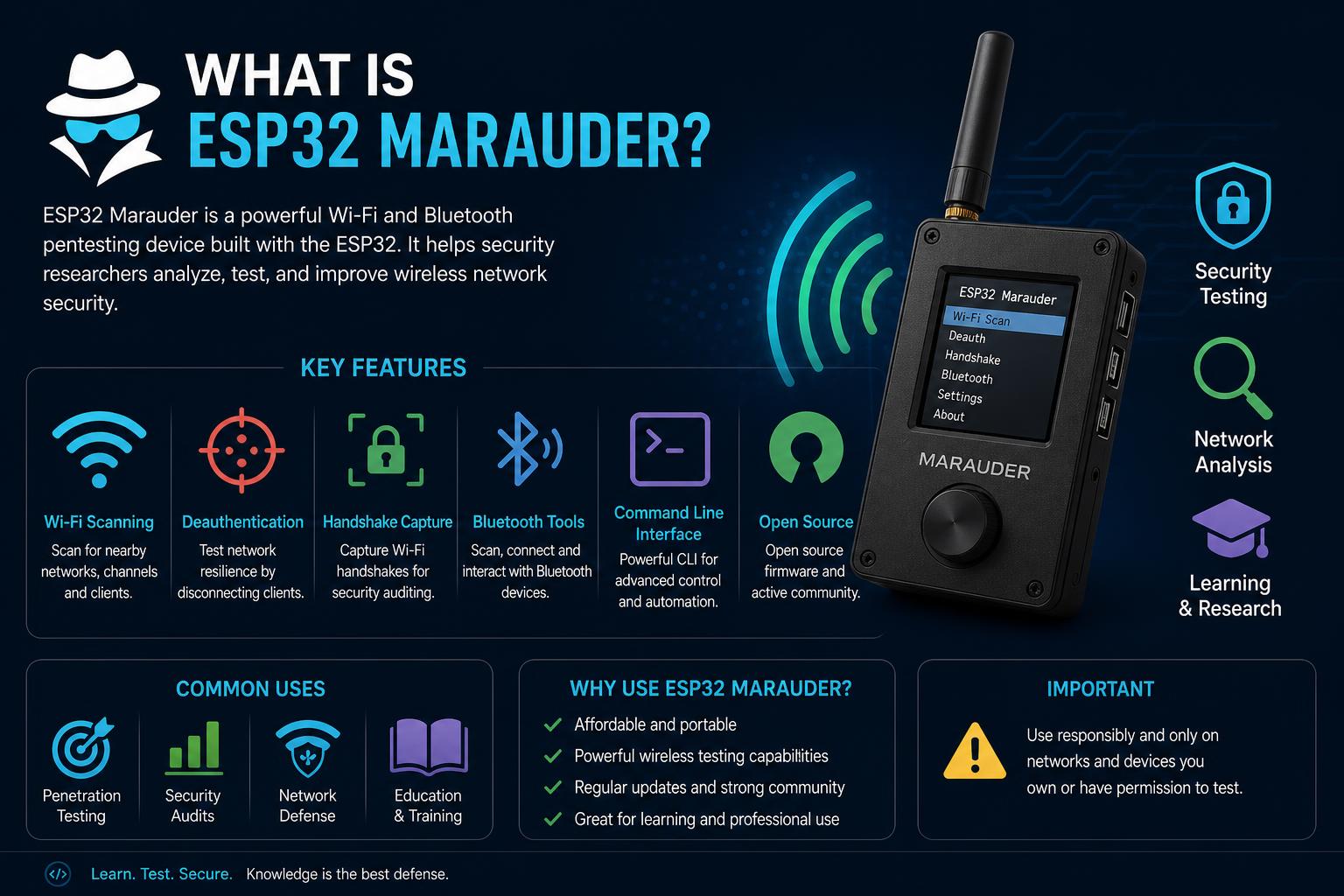
- The ESP32 Marauder is a multi-tool firmware suite enabling WiFi and Bluetooth network exploration and testing
- It provides both offensive and defensive cyber capabilities for the ESP32 platform
- ESP32 Marauder is widely supported, open-source, and can be expanded with devices like Flipper Zero
Curious about the ESP32 Marauder? If you’ve been browsing communities focused on WiFi security, network testing, or the ESP32 microcontroller, you have likely stumbled across the term. Yet, pinning down what it truly is and why it’s drawing so much buzz can be tough, especially with most search results being project repositories or discussion forums. You’re probably asking: Is the ESP32 Marauder just a novelty, a tool for mischief, or does it truly offer value for tech enthusiasts and professionals?
This article brings you everything you need to know about the ESP32 Marauder, from what it is to how it works, why it’s so talked about, and how it can be used both ethically and practically. We’ll break down its features, what sets it apart in the crowded world of pen-testing tools, and address some common questions and misconceptions. Whether you’re a beginner or already tinkering with network devices, this guide will serve as your one-stop resource for understanding ESP32 Marauder.
What Exactly is ESP32 Marauder?
The ESP32 Marauder is an open-source firmware suite designed to turn the popular ESP32 microcontroller into a powerful network exploration toolkit. Developed by the user ‘justcallmekoko’, this project has rapidly become popular among hobbyists, researchers, and even professionals in digital security. The ESP32 Marauder leverages the capabilities of the ESP32—a low-cost, WiFi and Bluetooth-enabled microcontroller—to perform tasks commonly used in wireless pen-testing and network analysis.
Simply put, installing ESP32 Marauder on your ESP32 device arms you with a versatile multi-tool for scanning, probing, and even attacking both WiFi and Bluetooth networks. While the software enables interaction with networks, it should always be used legally and ethically.
Origins and Community Support
The heart of the ESP32 Marauder project lies in its vibrant open-source roots. The main project is hosted publicly on GitHub, where hundreds of contributors and countless users exchange ideas, report issues, and help improve the firmware. This accessibility has resulted in extensive documentation, frequent updates, and a steadily growing toolkit.
The GitHub wiki (About ESP32 Marauder Wiki) provides a comprehensive overview, setup guides, and walkthroughs for different use cases. This ensures that even newcomers can get up and running quickly. Additionally, active discussions in social media and forums—especially on platforms like Reddit—highlight the community-driven nature of the project.
Core Capabilities of ESP32 Marauder
The ESP32 Marauder combines an extensive set of wireless tools into one firmware, focused around both ‘offensive’ and ‘defensive’ cyber activities:
- WiFi Network Scanning and Probing: Scan for nearby wireless networks (SSIDs), analyze their signal strength, and gather broadcasted info. The Marauder can reveal a lot about the networks in your vicinity, including hidden SSIDs.
- Handshake Capture: Collect WPA/WPA2 handshakes, which are cryptographic exchanges required for password cracking (theorized rather than recommended; brute-forcing a properly secured network remains nearly impossible).
- Deauthentication Attacks: Send ‘deauth’ packets to disconnect clients from WiFi access points, a technique often used to test WiFi robustness (and to ethically demonstrate weaknesses where permission is granted).
- Bluetooth & BLE Analysis: Scan, sniff, and interact with Bluetooth devices, enabling penetration testing and research into both Classic Bluetooth and BLE communications.
- Fake Beacon & SSID Broadcasting: Flood the airwaves with custom SSIDs—sometimes even joke SSIDs, like the famous “RickRoll” prank. Although mainly useful for testing or fun, this can have practical applications for network testing, red teaming, and spotting rogue access points.
- Defensive Tools: Besides offensive capabilities, ESP32 Marauder can also help monitor and defend your own network by detecting anomalies, rogue devices, or unauthorized SSID broadcasting.
This broad toolkit makes it highly appealing for enthusiasts eager to understand their wireless environment, as well as for security professionals needing portable solutions for assessments.
Why Does ESP32 Marauder Get So Much Attention?
The appeal of ESP32 Marauder stems from its accessibility, flexibility, and affordability. Compared to proprietary pen-testing platforms, this project offers a comprehensive toolkit using an inexpensive ESP32 board (often costing less than $10 USD).
The buzz also owes much to discussions across social media and forums. Platforms like Reddit feature conversations where users see Marauder both as a harmless prank tool and a serious testing platform. While some skepticism exists regarding its potential for actual attacks—especially on modern, well-secured networks—the consensus emphasizes its value as an educational and lawful assessment tool.
Moreover, its open-source nature fosters experimentation, hobby projects, and even commercial integrations—such as embedding ESP32 Marauder into third-party hardware.
Integration with Other Devices: The Flipper Zero Example
One of the most talked-about recent trends is using ESP32 Marauder as an add-on for the Flipper Zero. This device, originally intended for hardware hacking and penetration testing, can be extended by attaching an ESP32 running Marauder firmware.
This combination vastly expands what the Flipper Zero can perform:
- Enable advanced WiFi and Bluetooth analysis beyond the capabilities of the base device.
- Facilitate portable network evaluations, ideal for fieldwork or demonstrations.
- Access new features through ongoing firmware updates thanks to the active community behind ESP32 Marauder.
Retailers such as Electronic Cats and Hacker Warehouse now offer pre-assembled ESP32 Marauder modules compatible with Flipper Zero.
How Easy is it to Get Started?
Starting with ESP32 Marauder is straightforward for beginners. Thanks to detailed guides on the official , flashing the firmware onto an ESP32 module can take just a few minutes, especially if you have basic electronics knowledge.
The typical process involves connecting the ESP32 to a computer, using the recommended flashing tool, and following step-by-step instructions. The documentation accounts for potential hurdles, such as driver installation or serial configuration, simplifying the process. Since ESP32 boards are widely available, community support is strong for newcomers encountering issues.
Is ESP32 Marauder Legal and Ethical?
The legality of using ESP32 Marauder depends on responsible application. Its features—like deauthentication or handshake sniffing—require cautious and ethical use.
- Always obtain proper authorization before testing any wireless network you do not own.
- The tool is meant for education, security testing, and improving your own network defenses, not malicious hacking.
Community leaders emphasize the importance of understanding your legal jurisdiction and using these tools responsibly. Demonstrations and testing should never extend into unauthorized interference.
Common Criticism and Misconceptions
Some newcomers view ESP32 Marauder skeptically, often dismissing it as a device mainly for pranks, like broadcasting joke SSIDs or disconnecting clients. These functionalities can be misused; however, professionals leverage them to identify and fix vulnerabilities.
Its detection tools also help identify rogue access points or network vulnerabilities, transforming offensive features into safeguards.
Regarding WPA/WPA2 handshake capturing, critics rightly note that modern networks with strong passwords are highly resistant to cracking. Brute-force attacks are computationally intensive and largely impractical, positioning ESP32 Marauder more as an educational platform than a serious threat to well-secured networks.
Advanced Development and Customization
Developers and experienced users appreciate the modular, open-source design of ESP32 Marauder. Customization ranges from source code modifications to creating new features or integrating into larger pen-testing kits, aligning with the open hardware philosophy.
Frequent updates ensure compatibility with the latest WiFi and Bluetooth standards. Versatile ports allow adaptations to various hardware setups, as well as API development for mobile or desktop tools. The project’s flexibility makes it a continuously evolving platform.
Buying ESP32 Marauder Hardware and Pre-Built Solutions
While the firmware is freely available, some users prefer ready-to-use hardware rather than soldering and flashing on their own. Retailers offer fully assembled ESP32 Marauder boards, often developed for plug-and-play compatibility with devices like the Flipper Zero or with enclosed designs for standalone use.
Trusted sources, including the , recommend reputable sellers. Whether you seek a DIY project or a pre-made module, options are abundant in the community.
Who Should Consider Using ESP32 Marauder?
Due to its features, affordability, and ease of use, ESP32 Marauder is suitable for several groups:
- Students or educators exploring WiFi/Bluetooth security and protocols.
- Security professionals conducting assessments in the field.
- Network administrators aiming to detect vulnerabilities and enhance defenses.
- Hobbyists, makers, and tech enthusiasts interested in electronics and open hardware.
Staying Informed: Resources and Community
For the latest updates, the best resource is the , including its Wiki and tutorial list. Ecosystem activity includes YouTube demonstrations, forums like Reddit and Hackster.io, and commercial vendors offering hardware, ensuring diverse learning options.
The active community will likely keep driving innovation, adding features, and simplifying usage in future releases. Whether starting in wireless security, contributing to the open source, or seeking a new gadget, ESP32 Marauder has much to offer.
Ultimately, the ESP32 Marauder exemplifies how a united community and accessible hardware can empower both everyday users and security professionals. From network scanning and handshake capture to Bluetooth analysis, it opens up a wide world of possibilities. Backed by open-source code, commercial support, and compatibility with devices like the Flipper Zero, it has established itself as an essential tool in the realm of wireless network security and education. If you want to understand what is happening in the air around you, the ESP32 Marauder is an addition well worth having in your toolkit.